Are Your Project Roles Defined Correctly? Predictive vs. Agile vs. Hybrid
Are Your Project Roles Defined Correctly? Predictive vs. Agile vs. Hybrid
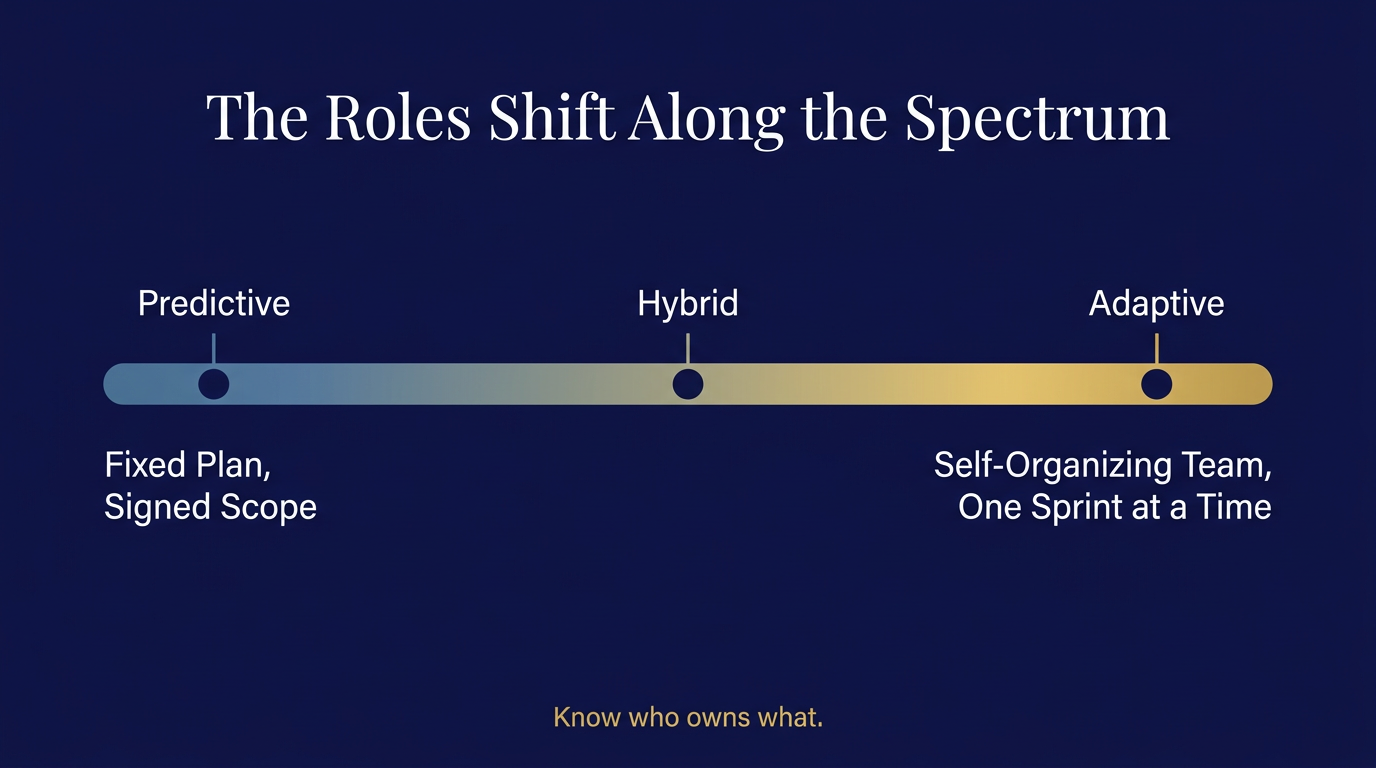
Every project sits somewhere on a spectrum. At one end is a fixed plan with a signed scope. At the other is a self-organizing team that learns its way forward one sprint at a time. The roles shift as you move along that spectrum, and knowing who owns what is the difference between a project that delivers and one that drifts.
In this post, based on our latest BMT Consulting training video, we walk through three environments (predictive, adaptive, and hybrid). For each one we look at the roles, what they own, and where the handoffs happen.
Predictive: The Plan Is the Plan
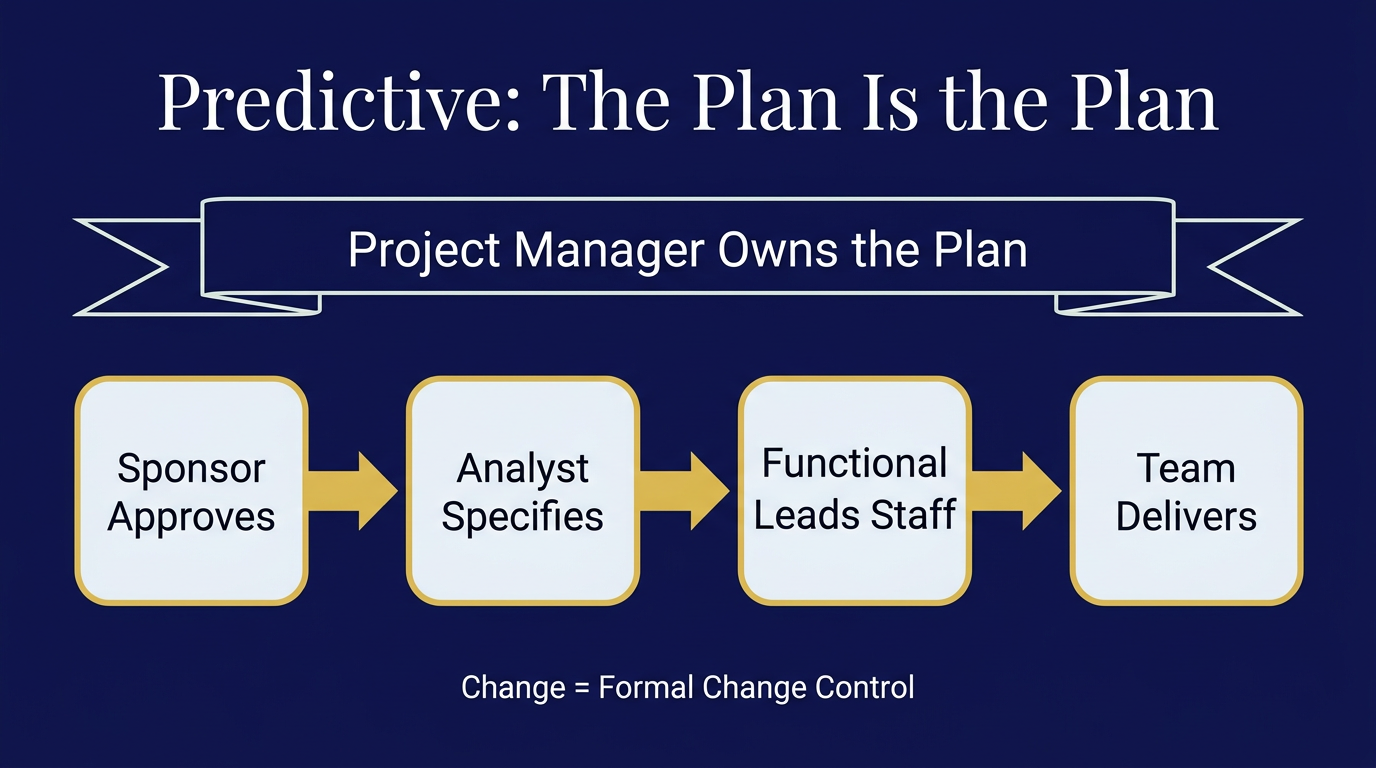
Predictive delivery, often called waterfall, is plan-driven. Scope is defined early, the schedule is baselined, and change moves through formal approval. In this model the project manager owns the plan, and every other role owns a slice of it.
What makes predictive work is the clarity of the handoffs:
The sponsor approves.
The analyst specifies.
Functional leads staff the work.
Team members deliver against dates.
Status is reported against the baseline, so slippage shows up early. Change is a formal event. A change to scope is a change to the baseline, the
budget, and the date. Route it through change control, never through a corridor conversation.
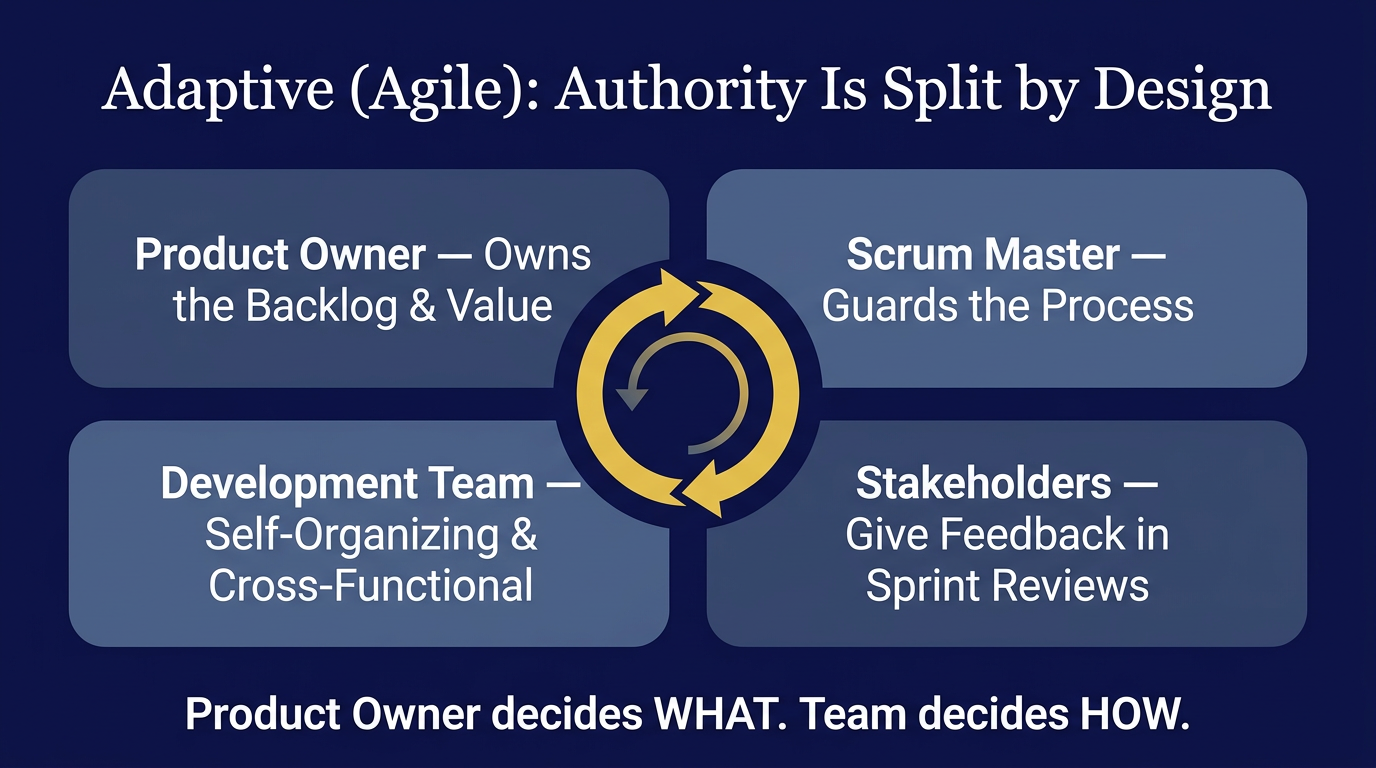
Adaptive (Agile): Authority Is Split by Design
An adaptive environment iterates, inspects, and adapts. Here the roles look very different:
The Product Owner owns the backlog and its order, defines value, and accepts or rejects each increment.
The Scrum Master guards the process, removes impediments, and coaches both the team and the wider organization.
The development team is self-organizing and cross-functional. It does the estimates and builds and tests a usable increment every sprint.
Stakeholders join sprint reviews, give feedback that reshapes the backlog, and adopt what ships.
Notice what is missing: nobody assigns tasks. The team pulls the work. The Product Owner decides what to build, and the team decides how. That split is the heart of adaptive delivery. Stakeholders see working software every couple of weeks instead of a status report, so feedback arrives while it can still change the product.
Hybrid: A Deliberate Blend, Not a Compromise
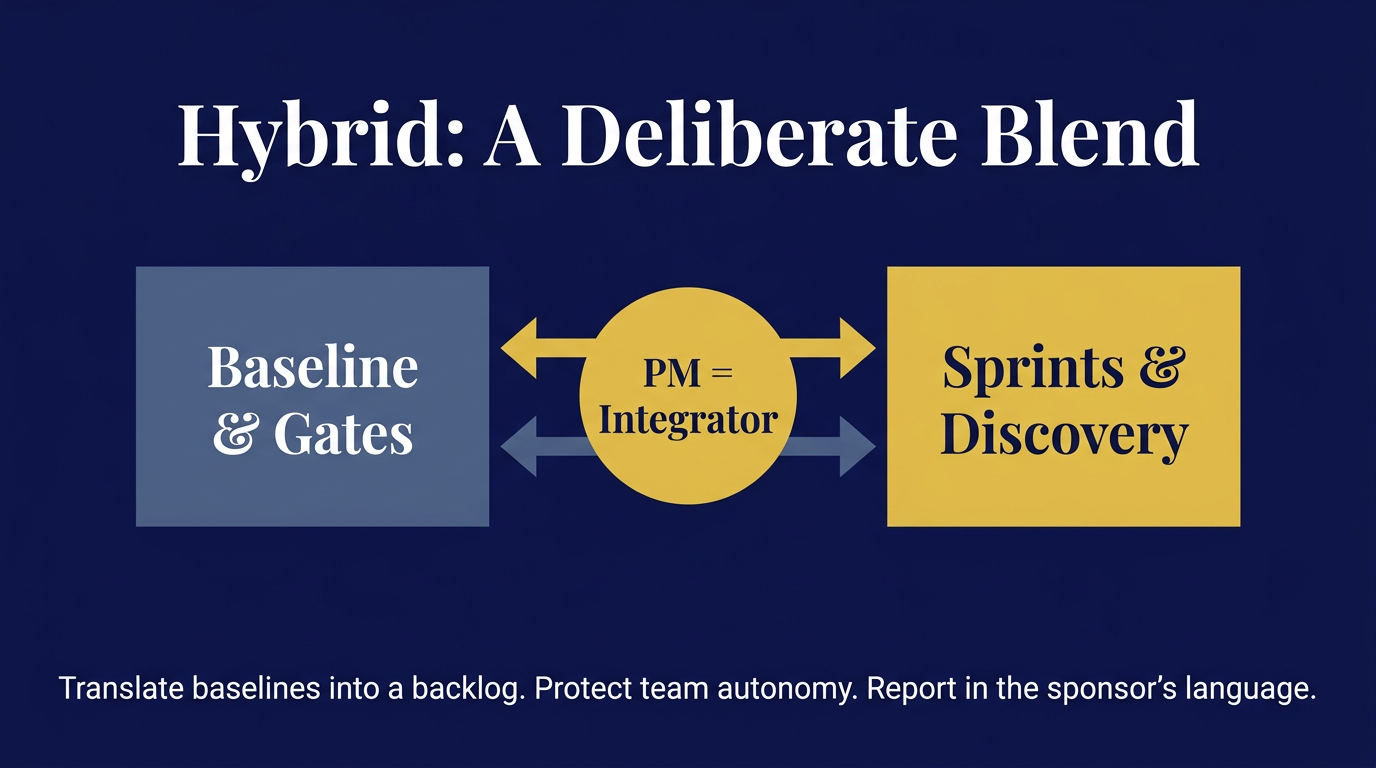
Hybrid is not a halfway point between the other two. It is a deliberate blend. Regulated hardware or contract-bound work keeps a baseline, while discovery-heavy work runs in sprints.
In hybrid, the project manager becomes the integrator. That person:
Translates baselines into a backlog.
Protects the team's autonomy inside the gates.
Reports progress in the language the sponsor expects.
Choose hybrid when:
Part of the outcome is known and part must be discovered.
A regulator or fixed-price contract sets the boundaries.
The organization is midway through a move from waterfall to agile and can't stop delivering while it changes.
The environment doesn't define the leader. The leader chooses the environment that fits the work.
Why This Matters for Your Exam
Whichever environment you work in, the roles are what you'll be tested on. Situational questions often hinge on knowing who has the authority to decide, approve, or escalate. Here is where each BMT Consulting course fits:
Course | What it covers |
|---|---|
PMP Exam Prep | Predictive, adaptive, and hybrid delivery, plus the People and Process domains the exam tests |
CAPM Exam Prep | Project fundamentals, the role of the project team, and the vocabulary employers expect |
PMI-ACP Exam Prep | Agile principles, Scrum, Kanban, and Lean, with practice questions across all seven domains |
Ready to Know Exactly Who Does What?
Watch the full video above, then bring your questions to this week's live sessions. Visit bmtconsulting.net to sign up for a course or join a study group today, and walk into your exam knowing who does what and why.
Subscribe to the BMT Consulting channel for the next video in this series. Which methodology do you find hardest to manage? Tell us in the comments. The video that goes along with this post is located here: