PMBOK® 8 Changes the Sustainability Conversation: Why Sustainability Is Now an Exam-Wide PMI Mindset
PMBOK® 8 Changes the Sustainability Conversation: Why Sustainability Is Now an Exam-Wide PMI Mindset
BMT Consulting Project Management Training Blog
Category: PMI Mindset | PMBOK® 8 | PMP® Exam Prep | Project Management
Reading Time: 8–10 minutes
Sustainability Is No Longer a “Sustainability Question”
If you are preparing for the PMP® exam using the PMBOK® Guide – Eighth Edition, there is an important mindset shift you need to understand:
Sustainability is not something you study, answer a few questions about, and then move on from. Sustainability is part of how PMI expects you to think about project decisions.
That distinction can make a significant difference in how you approach scenario-based exam questions.
PMBOK® 8 identifies “integrate sustainability” as one of its six core principles. At the same time, the guide emphasizes value delivery, adaptability, accountability, and tailoring across project environments.
So when you see a PMP® question involving stakeholders, risk, procurement, quality, resources, governance, scope, schedule, or value, don't automatically assume sustainability is irrelevant simply because the word “sustainability” does not appear in the question.
Instead, ask:
“What decision creates sustainable value while considering the broader impact of this project?”
That is the PMI Mindset.
What Changed in PMBOK® 8?
The Eighth Edition represents a significant evolution in how PMI presents project management.
PMBOK® 8 continues the principles- and performance-domain foundation introduced in the Seventh Edition, while simplifying and clarifying the guidance and adding expanded coverage of areas such as AI, PMOs, and procurement. PMI describes the edition as emphasizing value delivery, adaptability, and accountability.
One of its six core principles is:
Integrate Sustainability
This is important because sustainability is not presented simply as an environmental consideration.
Modern project sustainability considers the broader consequences of decisions involving:
Environmental impact
Social impact
Economic impact
Organizational resilience
Long-term value
Stakeholder expectations
Ethical considerations
Responsible use of resources
The consequences of project outcomes beyond project closure
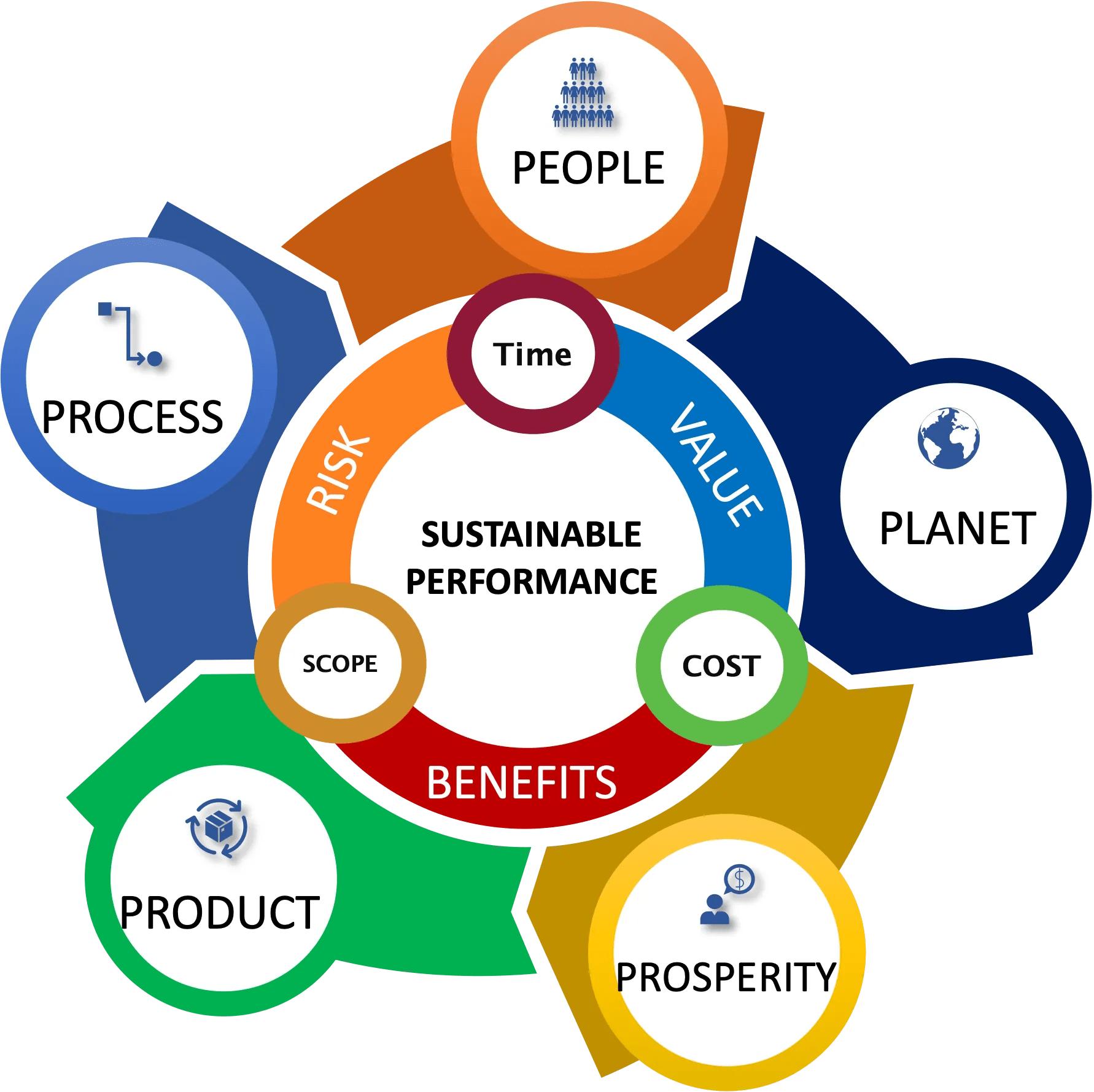
PMI's current sustainability guidance describes sustainable project management as the integration of environmental stewardship, social responsibility, and economic prosperity throughout the project lifecycle.
That's a much bigger concept than:
“Did we recycle?”
The Biggest PMP® Exam Mistake: Treating Sustainability as a Standalone Topic
Imagine you're studying for the PMP® exam and you create a checklist:
☐ Scope
☐ Schedule
☐ Cost
☐ Risk
☐ Quality
☐ Stakeholders
☐ Agile
☐ Hybrid
☐ Sustainability
You study each topic separately.
That approach can work for memorization.
But it doesn't necessarily prepare you for how PMI wants you to think through scenarios.
The PMP® exam is designed around applying project-management concepts to situations—not simply recognizing definitions.
So instead of thinking:
“This is a sustainability question.”
Think:
“How does sustainability influence the decision I am being asked to make?”
That is a much stronger approach.
Sustainability Can Show Up Almost Anywhere
Let's look at how sustainability can influence different areas of project decision-making.
1. Sustainability + Stakeholder Engagement
A project team discovers that a proposed solution will deliver the expected business benefit but could negatively affect a local community.
A weak response might be:
“The project meets the approved requirements, so continue.”
A stronger PMI-style response considers:
Who is affected?
What are their concerns?
What does the organization value?
What are the long-term consequences?
Can the solution be tailored?
Can negative impacts be reduced?
Is there an opportunity to create greater shared value?
PMI's current sustainability guidance specifically emphasizes understanding how sustainability shapes diverse stakeholder expectations and engaging stakeholders around sustainability goals.
PMI Mindset
Don't manage stakeholders only to obtain approval. Engage them to understand impact, create alignment, and improve outcomes.
2. Sustainability + Risk Management
Here's another common exam connection.
Suppose your project team identifies a potential environmental, social, or regulatory consequence associated with a project decision.
Don't automatically think:
“That's an environmental issue, so someone else owns it.”
Think:
“Could this affect project objectives, organizational value, stakeholder trust, compliance, cost, schedule, or the project's long-term outcome?”
If the answer is yes, it belongs in the project's decision-making system.
Sustainability can therefore influence:
Risk identification
Risk analysis
Risk responses
Opportunity identification
Assumptions
Constraints
Procurement decisions
Contingency planning
Governance decisions
PMI's newer sustainability guidance explicitly connects sustainability with risk reduction, resilience, governance, and long-term business value.
PMI Mindset
Don't wait for a sustainability problem to become an issue. Consider potential impacts while there is still time to influence the decision.
3. Sustainability + Quality
Quality is another area where candidates can fall into a trap.
Suppose a product technically meets its acceptance criteria but creates significant long-term operational problems.
Did the project succeed?
Not necessarily.
PMBOK® 8's emphasis on value means the project professional needs to think beyond:
“Did we produce the deliverable?”
and toward:
“Did we create the intended outcome and value?”
That means quality conversations can include:
Reliability
Maintainability
Lifecycle impact
Resource consumption
User experience
Long-term performance
Operational consequences
Stakeholder expectations
PMI Mindset
Quality is not merely conformance to requirements. Consider whether the deliverable continues to create value after it is delivered.
4. Sustainability + Procurement
Procurement decisions can have significant long-term consequences.
Imagine two vendors offer technically equivalent solutions.
Vendor A:
Lower initial price
Higher long-term operating costs
Less durable materials
Vendor B:
Slightly higher initial cost
Lower lifecycle cost
Longer useful life
Better resource efficiency
Should the project manager automatically select Vendor A?
Not necessarily.
The PMI Mindset encourages you to consider the broader value proposition, not simply the lowest immediate cost.
That means considering:
Initial cost + lifecycle value + risk + quality + stakeholder impact + organizational objectives
The cheapest option isn't automatically the best option.
PMI Mindset
Optimize value—not merely the purchase price.
5. Sustainability + Schedule
Here's an important exam-thinking distinction.
A project is behind schedule.
The sponsor wants the team to accelerate the work.
You could potentially:
Add resources
Fast-track activities
Crash the schedule
Reduce scope
Change sequencing
Increase work hours
But before selecting an action, ask:
What are the consequences of accelerating the project?
Could the decision:
Increase waste?
Create quality problems?
Overload the team?
Increase safety risks?
Increase resource consumption?
Create downstream operational problems?
Reduce long-term value?
The PMI Mindset isn't:
“Finish faster at any cost.”
It is:
“Deliver value responsibly while balancing competing constraints and impacts.”
6. Sustainability + Agile
This is where sustainability becomes especially interesting.
Agile teams continuously inspect and adapt.
That creates opportunities to incorporate sustainability into:
Product vision
Product backlog
User stories
Acceptance criteria
Definition of Done
Prioritization
Sprint planning
Reviews
Retrospectives
Release planning
Product roadmaps
For example:
User Story
As a customer, I want the application to minimize unnecessary data usage so that I can use it efficiently on limited bandwidth.
Now sustainability isn't a separate project activity.
It's part of the product requirement.
The team can incorporate it into acceptance criteria and potentially the Definition of Done.
That's exactly the type of integration that reflects an Agile PMI Mindset.
7. Sustainability + Value Delivery
This may be the most important connection of all.
PMBOK® 8 places significant emphasis on creating and delivering value. PMI describes the Eighth Edition as connecting project management to organizational value through a system for value delivery.
So ask yourself:
What is the difference between an output and an outcome?
An output is what the project produces.
An outcome is what happens because of what the project produced.
And value is the benefit realized from those outcomes.
Now add sustainability.
A project may successfully produce its deliverable but still fail to create sustainable long-term value.
That's why PMI's current sustainability guidance encourages project professionals to look beyond delivery and consider the longer-term environmental, social, and economic implications of project decisions.
The Sustainability Question You Should Ask on Every PMP® Scenario
Here's a BMT Consulting technique I recommend:
The SUSTAINABILITY CHECK
When you're working through a scenario, ask:
S — Stakeholders
Who is affected by this decision?
U — Understand the impact
What are the short- and long-term consequences?
S — Strategic value
Does the decision support organizational objectives?
T — Trade-offs
What are we sacrificing to achieve this result?
A — Adapt
Can we change the approach to improve the outcome?
I — Integrate
Can sustainability be incorporated into the existing project decision rather than treated separately?
N — Next best action
What should the project professional do now?
A — Accountability
Who owns the decision and its consequences?
B — Broader perspective
Are we considering more than the immediate project deliverable?
I — Impact
What impact will the decision have on people, the organization, and the environment?
L — Long-term value
Will this decision continue to create value after the project delivers?
I — Inspect and improve
What feedback or evidence should influence the next decision?
T — Tailor
What response fits this specific project context?
Y — Your PMI Mindset
Which option best reflects responsible, value-focused project leadership?
You don't need to literally run through all 13 questions during the exam.
Instead, practice developing the habit of thinking this way.
Sustainability Is Also About “What Happens Next”
One of the most important PMI Mindset shifts is moving away from:
“Did we finish the project?”
toward:
“What value did the project create, and what happens after delivery?”
Projects are temporary.
Their consequences aren't.
A system may operate for years.
A facility may remain in service for decades.
A software platform may affect thousands or millions of users.
A process improvement may change how an organization operates long after the project team has disbanded.
Therefore, responsible project leadership requires thinking beyond the project boundary.
PMI's sustainability research reinforces this idea, describing sustainability as increasingly connected to business resilience, competitiveness, and long-term value creation rather than simply being a “green” initiative.
What This Means for Your PMP® Exam Preparation
Don't create a separate notebook called:
“Sustainability Questions.”
Instead, add sustainability thinking to your existing study system.
When studying Risk, ask:
How could sustainability affect risk?
When studying Stakeholders, ask:
Who could experience long-term impacts?
When studying Quality, ask:
Does the solution create lasting value?
When studying Procurement, ask:
What are the lifecycle consequences?
When studying Agile, ask:
How can sustainability become part of the product and backlog?
When studying Governance, ask:
Who is accountable for the broader consequences of this decision?
When studying Value, ask:
Is the project delivering an output—or sustainable organizational value?
That is how you turn sustainability from a chapter into a PMI decision-making lens.
What Could This Look Like on the PMP® Exam?
Consider this scenario:
A project team discovers that its preferred solution will meet all technical requirements and remain within budget. However, an alternative solution would slightly increase the initial cost while reducing long-term environmental impact and operational costs. The stakeholders have not yet evaluated the alternatives. What should the project manager do FIRST?
Don't jump immediately to:
A. Select the lower-cost solution.
Instead, apply the PMI Mindset.
The project manager should first:
Understand the alternatives, engage the appropriate stakeholders, evaluate the broader impacts and value, and support an informed decision.
Notice what happened.
The question wasn't necessarily labeled:
“SUSTAINABILITY QUESTION.”
It was really testing:
Value
Stakeholder engagement
Decision-making
Trade-offs
Long-term thinking
Responsible leadership
Sustainability
That's the point.
Sustainability + the Six PMBOK® 8 Principles
A powerful way to study PMBOK® 8 is to recognize that its principles don't operate independently.
The guide identifies six core principles, including focusing on value, embedding quality, leading accountably, integrating sustainability, and building empowered teams.
Sustainability can intersect with each one.
PMBOK® 8 Principle | Sustainability Connection |
|---|---|
Holistic View | Consider the project as part of a larger system. |
Focus on Value | Consider long-term value—not just immediate outputs. |
Embed Quality | Build sustainable characteristics into the product and process. |
Lead Accountably | Accept responsibility for decisions and their consequences. |
Integrate Sustainability | Consider environmental, social, and economic impacts. |
Build an Empowered Team | Give teams the authority and information needed to make responsible decisions. |
This is why sustainability should not be studied in isolation.
The principles reinforce one another.
The BMT Consulting PMI Mindset
At BMT Consulting, we teach students to avoid asking:
“What does the PMBOK® tell me to memorize?”
Instead, ask:
“What would a responsible project professional do next, given this situation?”
That distinction matters.
The PMI Mindset is about:
People → Value → Context → Collaboration → Transparency → Adaptation → Outcomes → Continuous Improvement
Sustainability fits naturally into that chain.
It helps us ask whether our decisions create value responsibly—not simply whether they allow us to complete today's task.
Your PMP® Study Challenge
This week, take 10 practice questions from any PMP® domain.
For every question, add one additional question to your analysis:
“What could be the longer-term impact of this decision?”
Then ask:
Who is affected?
What value is being created?
What risks or opportunities exist?
What trade-offs are present?
What information is missing?
Who should be involved?
Can the approach be tailored?
What is the best next action?
You're training yourself to see the system behind the scenario.
That's exactly the kind of thinking PMBOK® 8 is encouraging.
Final Takeaway: Don't Memorize Sustainability. Practice It.
The biggest lesson is simple:
Sustainability is not a box you check. It is a lens through which you evaluate project decisions.
The modern project professional needs to think beyond completing scope, meeting a deadline, and staying within budget.
The real question becomes:
“Are we delivering the right value, responsibly, and in a way that remains valuable over time?”
That question can influence how you approach stakeholders, risk, quality, procurement, resources, governance, Agile delivery, value, leadership, and ultimately the exam itself.
PMI's current sustainability research goes even further, identifying sustainability as a leading predictor of project success while highlighting the gap between organizational sustainability ambitions and the ability to execute those ambitions through projects.
And that is why understanding sustainability isn't simply about passing a few sustainability questions.
It's about learning to think like the project professional PMI expects you to become.
🎯 BMT Consulting Exam Tip
When you see an exam question involving a difficult decision, don't immediately look for the answer that is:
fastest,
cheapest,
easiest,
most familiar,
or most convenient.
Instead, ask:
What option best protects value, considers stakeholders, addresses the real problem, supports responsible outcomes, and fits the project context?
That's the PMI Mindset.
🚀 Ready to Strengthen Your PMI Mindset?
At BMT Consulting, we don't believe PMP® preparation should be about memorizing hundreds of definitions and hoping they appear on the exam.
We help project professionals learn how to think through scenarios, apply the PMI Mindset, understand Agile, predictive, and hybrid delivery, and make the decisions PMI expects from today's project professionals.
Prepare smarter. Think like PMI. Lead with confidence.
BMT Consulting LLC
Project Management Training & Curriculum Development
At BMT Consulting, our goal is to help project professionals become certification-ready and future-ready. Go to the sites listed below for more information or to sign up for a course.
PMP® | CAPM® | PMI-ACP® Training • Study Groups • Exam Preparation • Curriculum Development